
Sep 25th 2026
Expectations Matter
Expectations Matter: Choosing an Award That Fits the Achievement
Years ago, several years before we went into the awards business, our town hosted a number of amateur softball tournaments during the summer months. Teams came from all over the state to compete.
At the time, everyone pretty much knew what to expect if they won one of these tournaments. The traditional first-place award was a trophy—usually a big one, standing two or three feet tall.
Then, at one tournament, the sponsors decided to do something different.
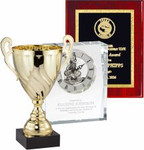
Instead of the traditional large trophy, the first-place team was presented with a plaque measuring approximately 12" x 15".
There was nothing necessarily wrong with the plaque. It may have been attractive, well made, and properly engraved. But it wasn't what the winning team expected.
A friend who was there told me that after the presentation, the captain of the winning team took the plaque and frisbeed it toward second base.
Not exactly the reaction the tournament sponsors were hoping for.
The Problem Wasn't Necessarily the Plaque
I've remembered that story for years because it illustrates something important about recognition:
Expectations matter.
The winning team had spent the tournament working toward something. And whether anyone had actually promised them a large trophy or not, previous tournaments had established an expectation.
Win the tournament, and you get the big trophy.
So when the team received something dramatically different, the perceived value of the award didn't match the perceived value of their accomplishment.
That's a lesson that applies well beyond softball.
What Does the Recipient Expect?
Whether we're recognizing achievement in sports, academics, business, community service, or almost anything else, one of the questions we should ask is:
What will this achievement mean to the person receiving the award?
A six-year-old playing in a first soccer tournament may treasure a small trophy or medal.
A high school athlete completing an outstanding season may expect something more substantial.
An employee celebrating 25 years with a company probably shouldn't receive the same type of recognition given for perfect attendance during a single month.
A volunteer who has devoted hundreds of hours to an organization deserves recognition that feels appropriate to that contribution.
That doesn't mean every award needs to be large or expensive. It means the award should feel appropriate to the achievement.
Budget Matters—But So Does Recognition
Every organization has a budget, and sometimes that budget places real limits on what can be done.
We understand that.
The solution isn't necessarily to spend more money. Often, it's to make better choices with the money available.
A smaller award that is thoughtfully designed, personalized, and appropriate for the occasion can have considerably more impact than a larger award that seems generic or disconnected from the achievement.
But there's another mistake organizations sometimes make when budgets get tight: deciding not to recognize the achievement at all.
We believe no award should be the last option, not the first solution.
There are usually ways to create meaningful recognition at different price points. The size, material, or style may change, but the message doesn't have to:
What you accomplished mattered, and we noticed.
Awards Create Expectations, Too
There's another side to the lesson from that softball tournament.
Once an organization establishes a tradition of recognition, that tradition creates expectations.
If you've presented substantial championship trophies for ten years and suddenly replace them with something much smaller, people are going to notice.
If employees have traditionally received meaningful service awards at major anniversaries and those awards suddenly disappear, they'll notice that too.
Traditions don't mean an awards program can never change. Styles change. Budgets change. Organizations change.
But when you change an established recognition program, it's worth thinking about how that change will be perceived by the people receiving the awards.
Match the Award to the Achievement
After years in the awards business, we've seen recognition take many forms—trophies, plaques, medals, acrylics, glass awards, engraved gifts, and countless custom pieces.
There isn't one perfect award for every occasion.
The important question is whether the award fits the accomplishment.
Before choosing an award, consider the achievement, the recipient, the tradition surrounding the event, your budget—and the expectations that have already been established.
Because long after the presentation is over, you want the recipient to remember what the award represented.
And preferably, you don't want to see it sailing toward second base.